Capability
The Logic of Deterrence: Strategy, Fear, and the Balance of Power
What is the strategic, technological and financial relevance of The Logic of Deterrence for European defence autonomy and allied capability?
Deterrence has long been regarded as one of the fundamental logics of international security. The thread links it to deterrence, readiness and allied capability.
This public thread presents the concise analytical answer. The complete evidence, source base and assessment are available below.
Part of our Defence & Dual-Use Companies and Policy, Procurement & Institutions coverage →
Original DFM publication · DFM Analysis report · 2025-08-29
Deterrence has long been regarded as one of the fundamental logics of international security. Far from being an abstract notion or a Cold War artifact, it remains the organizing principle through which states define their strategic posture, calibrate their military capabilities, and communicate credibility to allies and adversaries alike. The paradox at its core is well known: peace is preserved not by the absence of force but by the credible threat of its use. This study explores that paradox in depth, examining deterrence as both a historical practice and a contemporary necessity. From the Roman use of exemplary punishment to the nuclear balance of the twentieth century, deterrence has functioned as a grammar of power that restrains aggression by shaping perceptions of cost and risk. Today, as systemic rivalry resurfaces and new domains of competition emerge—cyber, space, and the economy—deterrence continues to evolve, demanding fresh analysis and renewed strategic clarity. In the vocabulary of international security, few terms possess the conceptual and operational density of deterrence. It is not an abstract idea, nor a generic formula useful only for peacetime strategy. Deterrence today forms the structural backbone of state strategy, the organizing principle of military postures and technological choices, the grammar through which states construct, signal, and communicate their readiness to respond to threats.
Choose how to continue
Go deeper on this question
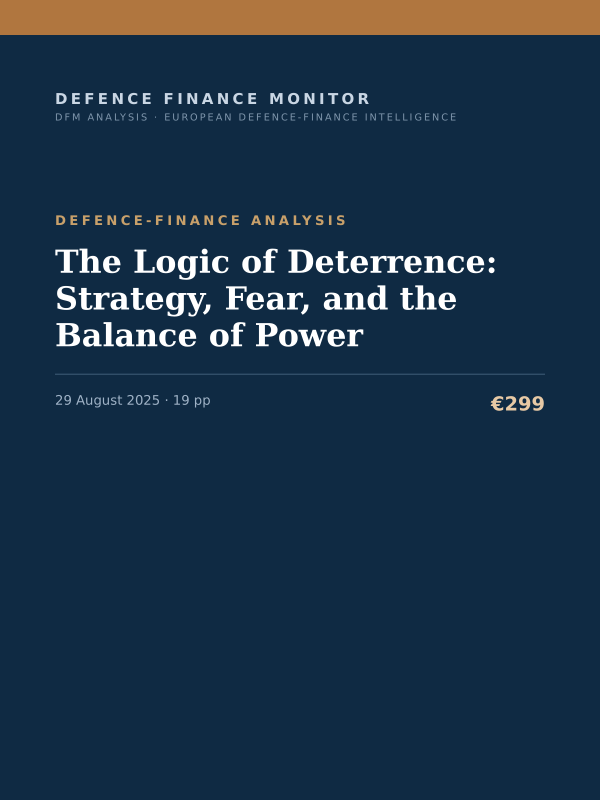 Full sourced report
The Logic of Deterrence: Strategy, Fear, and the Balance of Power
View the report →
Full sourced report
The Logic of Deterrence: Strategy, Fear, and the Balance of Power
View the report →
Keep getting the analysis
DFM publishes new defence-finance analysis every week.
Original DFM analysis
The Logic of Deterrence: Strategy, Fear, and the Balance of Power
The publication details above identify the source used for this public thread.
Related DFM Platform threads
Explore this category Strategic Autonomy
Professional requests (internal interest signal — not a marketplace; nothing is charged or promised)
See Professional & Institutional Access — plans, group/institutional seats and contact →
Defence Finance Monitor is an analytical and informational product. It does not constitute investment advice, financial advice or a recommendation to buy or sell securities. Subscriptions run on DFM Analysis. Payments for Professional Packs are processed securely by Stripe at checkout.