Capability
Quantum Motion – Strategic-Technological Analysis
How does Quantum Motion build qubits using standard silicon CMOS technology rather than exotic hardware?
Quantum Motion is a British deep-tech venture at the forefront of Europe’s quantum. Strategic-technological profile; 36-page sourced DFM PDF report.
This public thread presents the concise analytical answer. The complete evidence, source base and assessment are available below.
Part of our Research, Universities & Deep Tech and Defence & Dual-Use Companies coverage →
Original DFM publication · DFM Analysis report · 2025-11-24
Quantum Motion is a British deep-tech venture at the forefront of Europe’s quantum computing race. Spun out of University College London and Oxford in 2017, the company is pioneering a new approach to quantum processors by leveraging silicon CMOS technology .
Instead of exotic hardware, Quantum Motion uses the same kind of standard chips found in everyday electronics to create qubits – the basic units of quantum information. This novel strategy enabled the firm to deliver the world’s first full-stack quantum computer built on silicon chips in 2025 .
This analysis answers: How does Quantum Motion build qubits using standard silicon CMOS technology rather than exotic hardware? What is the significance of its 2025 full-stack quantum computer on silicon chips for European strategic autonomy? Which partners, programmes and dual-use markets support this UCL and Oxford spin-out's strategy? What capability gaps, IP and supply dependencies shape Quantum Motion's position in Europe's quantum computing race?
Key takeaways
- Instead of exotic hardware, Quantum Motion uses the same kind of standard chips found in everyday electronics to create qubits – the basic units of quantum information.
Choose how to continue
Go deeper on this question
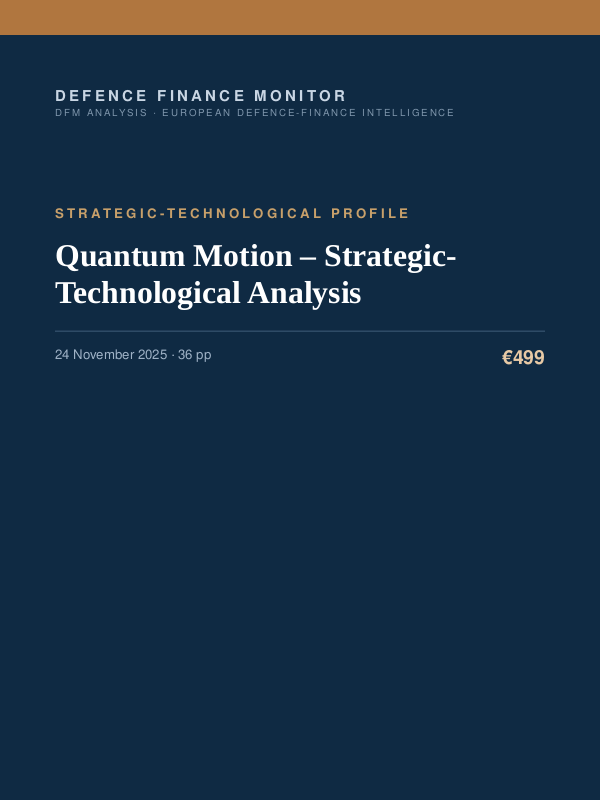 Full sourced report
Quantum Motion – Strategic-Technological Analysis
View the report →
Full sourced report
Quantum Motion – Strategic-Technological Analysis
View the report →
Keep getting the analysis
DFM publishes new analysis on Microelectronics, Quantum & Biotechnology every week.
Original DFM analysis
Quantum Motion – Strategic-Technological Analysis
The publication details above identify the source used for this public thread.
FAQ
What is Quantum Motion – Strategic-Technological Analysis?
Spun out of University College London and Oxford in 2017, the company is pioneering a new approach to quantum processors by leveraging silicon CMOS technology .
Why does Quantum Motion – Strategic-Technological Analysis matter for European defence?
This novel strategy enabled the firm to deliver the world’s first full-stack quantum computer built on silicon chips in 2025 .
Related DFM Platform threads
- Europe's High-Low Arsenal: $50.66bn Pledged to Deep Strike, and the Magazine No Public Record Sets
- UK's £400k Strike Weapon vs the $4m PAC-3 MSE: Why Cheap Autonomy Forces Europe to Buy More Layers, Not Fewer
- PAC-3, SAMP/T and Europe's Missile Constraint: Can Cheap Unmanned Mass Substitute for the Expensive Upper Layer?
Explore this category Strategic Autonomy
Professional requests (internal interest signal — not a marketplace; nothing is charged or promised)
See Professional & Institutional Access — plans, group/institutional seats and contact →
Defence Finance Monitor is an analytical and informational product. It does not constitute investment advice, financial advice or a recommendation to buy or sell securities. Subscriptions run on DFM Analysis. Payments for Professional Packs are processed securely by Stripe at checkout.