Capability
Cybersecurity Compliance as an Industrial Filter in the Defence Supply Chain
How has the institutionalization of cybersecurity requirements evolved from a technical safeguard into a structural mechanism determining who can participate in the defence industrial base?
Cybersecurity Compliance as an Industrial Filter in the Defence Supply Chain: The institutionalization. Defence-finance analysis; 15-page sourced DFM PDF repor…
This public thread presents the concise analytical answer. The complete evidence, source base and assessment are available below.
Part of our Policy, Procurement & Institutions and Defence & Dual-Use Companies coverage →
Original DFM publication · DFM Analysis report · 2026-02-28
The institutionalization of cybersecurity requirements in defence procurement has evolved from a technical safeguard into a structural mechanism that determines who can participate in the defence industrial base. By conditioning contract eligibility on validated compliance with standards such as NIST SP 800-171 and the Cybersecurity Maturity Model Certification (CMMC), U.S.
policy has transformed cyber posture into a gatekeeping variable. This shift responds to documented vulnerabilities in contractor networks and to persistent threats targeting defence-related information. However, the effect extends beyond risk mitigation.
This analysis answers: How has the institutionalization of cybersecurity requirements evolved from a technical safeguard into a structural mechanism determining who can participate in the defence industrial base? How do standards such as NIST SP 800-171 and the Cybersecurity Maturity Model Certification (CMMC) condition contract eligibility and act as a gatekeeping variable? What documented vulnerabilities in contractor networks and persistent threats does this compliance regime respond to? How does cyber compliance function as an industrial filter beyond risk mitigation, and who does it exclude from the defence supply chain?
Key takeaways
- However, the effect extends beyond risk mitigation.
Choose how to continue
Go deeper on this question
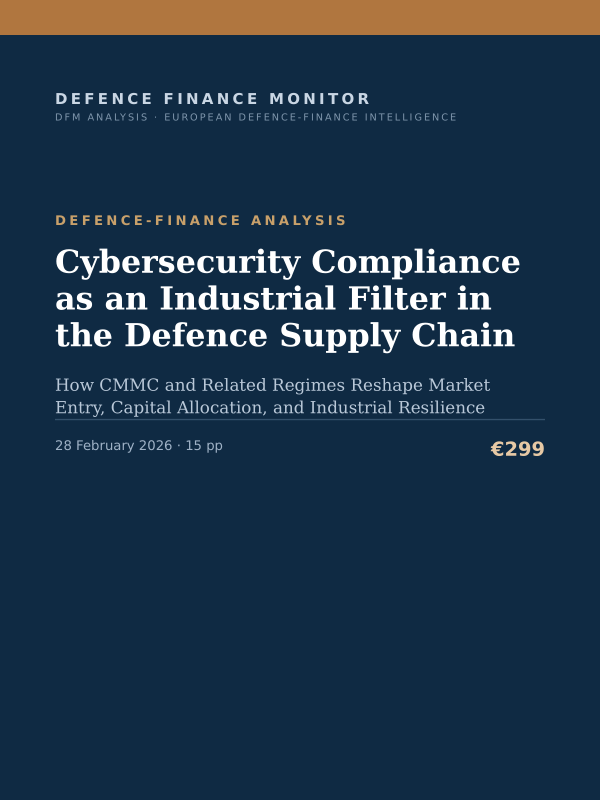 Full sourced report
Cybersecurity Compliance as an Industrial Filter in the Defence Supply Chain
View the report →
Full sourced report
Cybersecurity Compliance as an Industrial Filter in the Defence Supply Chain
View the report →
Keep getting the analysis
DFM publishes new defence-finance analysis every week.
Original DFM analysis
Cybersecurity Compliance as an Industrial Filter in the Defence Supply Chain
The publication details above identify the source used for this public thread.
FAQ
What is Cybersecurity Compliance as an Industrial Filter in the Defence Supply Chain?
policy has transformed cyber posture into a gatekeeping variable.
Who can access Cybersecurity Compliance as an Industrial Filter in the Defence Supply Chain, and who does it apply to?
This shift responds to documented vulnerabilities in contractor networks and to persistent threats targeting defence-related information.
Related DFM Platform threads
- Europe's High-Low Arsenal: $50.66bn Pledged to Deep Strike, and the Magazine No Public Record Sets
- UK's £400k Strike Weapon vs the $4m PAC-3 MSE: Why Cheap Autonomy Forces Europe to Buy More Layers, Not Fewer
- PAC-3, SAMP/T and Europe's Missile Constraint: Can Cheap Unmanned Mass Substitute for the Expensive Upper Layer?
Explore this category Strategic Autonomy
Professional requests (internal interest signal — not a marketplace; nothing is charged or promised)
See Professional & Institutional Access — plans, group/institutional seats and contact →
Defence Finance Monitor is an analytical and informational product. It does not constitute investment advice, financial advice or a recommendation to buy or sell securities. Subscriptions run on DFM Analysis. Payments for Professional Packs are processed securely by Stripe at checkout.