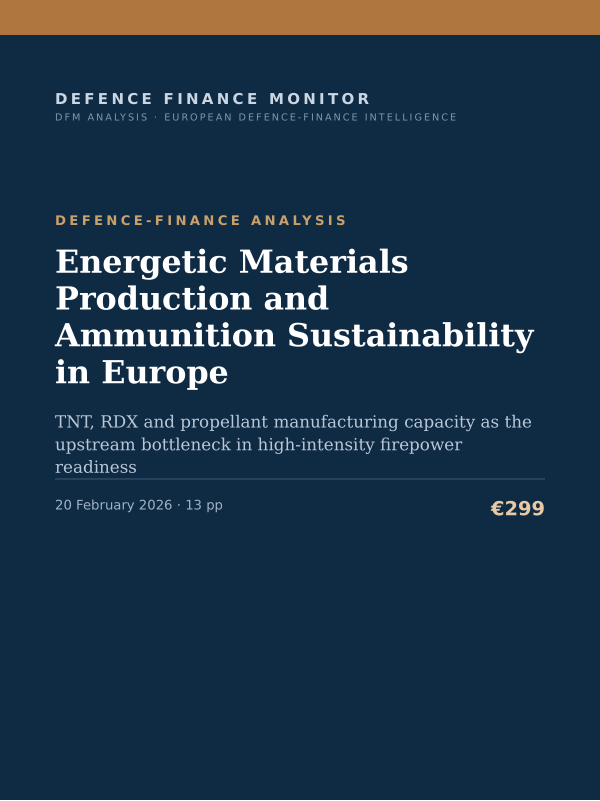
Energetic Materials Production and Ammunition Sustainability in Europe
TNT, RDX and propellant manufacturing capacity as the upstream bottleneck in high-intensity firepower readiness
13 pages · PDF · 20 February 2026 · Licensed single-user copy, watermarked to the buyer
Strategic Energetic Materials Propellants Industrial Production Capacity
€299 excl. VAT — EU VAT calculated at checkout (VAT ID accepted for reverse charge); invoice issued after payment
One click to Stripe — guest checkout, no account. Your download appears on the confirmation page and arrives by e-mail right after payment (link valid 72 hours, up to 5 downloads).
About this report
The ability to sustain high-intensity combat operations ultimately depends on the continuous production of energetic materials such as TNT, RDX and propellants. When these upstream industrial lines are absent, fragmented or under-capacity, ammunition stocks deplete rapidly and operational tempo collapses, regardless of the readiness of downstream assembly facilities.
Recent conflicts have demonstrated that artillery and missile consumption rates can outpace existing NATO and EU production capacities within weeks, exposing structural vulnerabilities in Europe’s defence industrial base.
Key questions this report answers
- How does sustaining high-intensity combat depend on continuous production of energetic materials such as TNT, RDX and propellants?
- What structural vulnerabilities arise when upstream energetic-material lines are absent, fragmented or under-capacity?
- How do artillery and missile consumption rates outpace existing NATO and EU production capacities, and what does this expose in Europe's defence-industrial base?
- What industrial-capacity, ammunition-sustainability and investment implications follow for Europe?
Who it's for
Strategy, corporate-development and investment teams that need an ecosystem-level view — budgets, industrial capacity and technology landscapes — before committing capital or capacity.
Related reports
Methodology, format & delivery
DFM reports are built from primary and official sources — TED procurement notices, CORDIS and the EU Funding & Tenders Portal, EIB operations, the NATO Innovation Fund portfolio, SIPRI data, official budget documents and company disclosures — read together with the underlying legal texts. Sources are cited in the document; it reflects them as of its publication date (20 February 2026). You receive a 13-page PDF, watermarked to you on every page, delivered on the confirmation page and by e-mail immediately after checkout (personal link valid 72 hours, up to 5 downloads). Guest checkout, single-user licence — Terms of Sale.
Related on DFM
More Strategic reports · Energetic Materials · Propellants · Industrial Production Capacity · All reports
Prefer unlimited access?
Prefer unlimited access? Every report like this is included in the DFM Analysis subscription. See plans →