Thematic analyses on supply chains, EU funding rules and the sites and
programmes behind them, plus eligibility reports and company profiles. Each is a dated, sourced
PDF, watermarked to the buyer and delivered immediately after checkout — one-off purchase, no
subscription, no account.
In focus this week (€299 thematic analyses, chosen by search demand, rotates weekly)
Emergency Repair Teams address a decisive resilience failure mode: the inability to restore minimum service levels of critical infrastructure rapidly under multi-site disruption in crisis or conflict.
The strategic vulnerability in Western defence supply chains does not primarily originate at the level of rare-earth mining, but at the downstream metallurgical stages that convert ores into usable oxides, metals…
The institutionalization of cybersecurity requirements in defence procurement has evolved from a technical safeguard into a structural mechanism that determines who can participate in the defence industrial base.
The strategic landscape of Europe is undergoing a fundamental recalibration, transitioning from a post-Cold War emphasis on expeditionary management to a robust “Readiness First” posture.
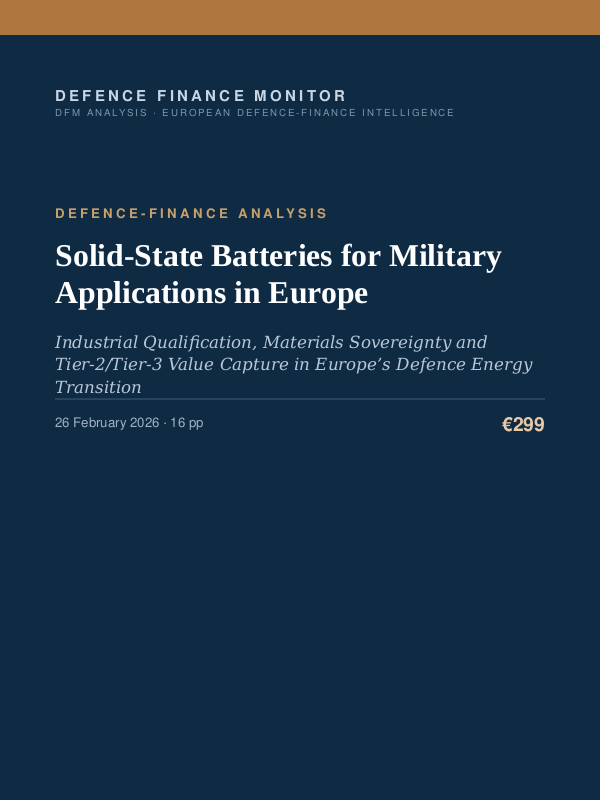
Solid-state battery technology is frequently discussed in terms of theoretical energy-density gains, yet its relevance for European defence depends on a more demanding set of industrial conditions.
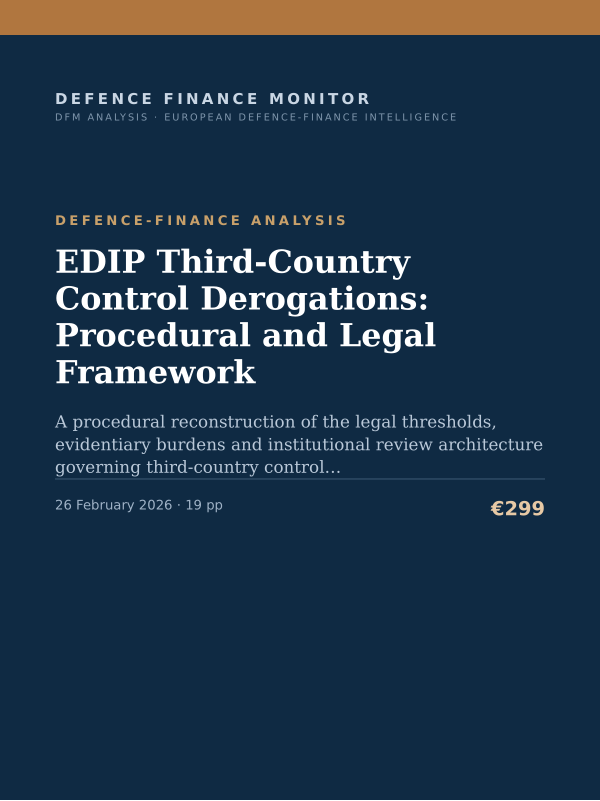
This analysis provides a structured examination of how EU-established entities controlled by non-associated third countries may obtain eligibility under the European Defence Industry Programme, detailing the…
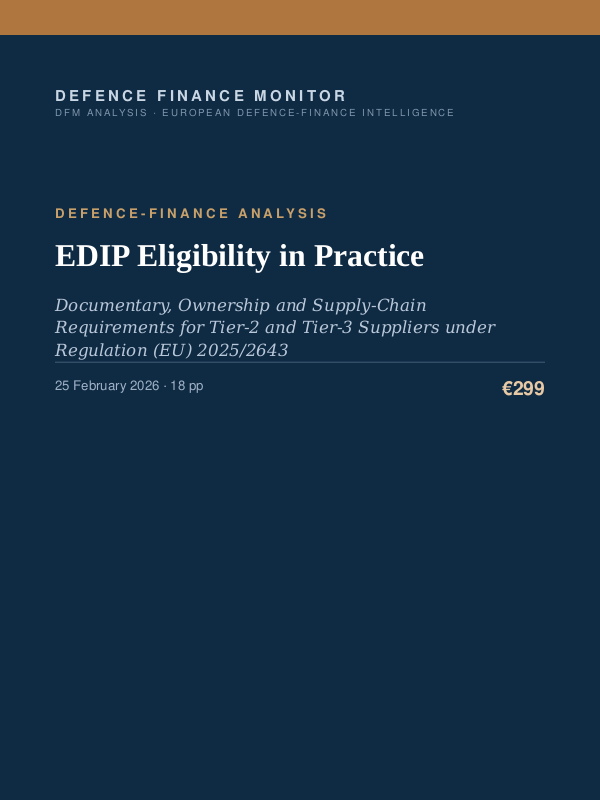
This report provides a legally rigorous, regulation-anchored analysis of eligibility requirements under Regulation (EU) 2025/2643 establishing the European Defence Industry Programme, with specific focus on Tier-2 and…
24/48/72h High-Readiness Forces address a structurally decisive failure mode in collective defence: the inability to translate political activation into combat-effective reinforcement within the first days of a crisis.
The integration of Galileo’s Public Regulated Service into European defence platforms is not primarily a technology problem — it is an industrial power problem.
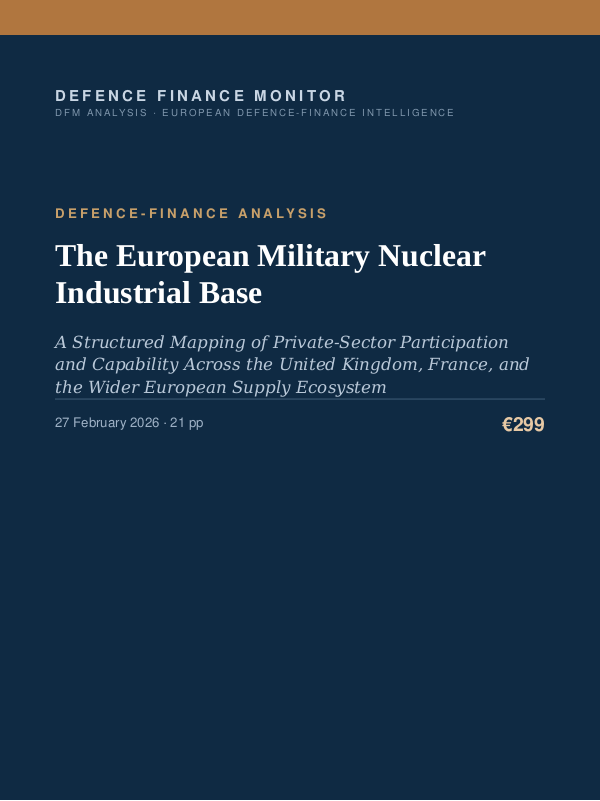
The debate over a European nuclear deterrent — long confined to the margins of strategic discourse, treated as a taboo in Berlin, a doctrinal provocation in Paris, and a distraction in London — has entered the…
The central analytical question is not which emerging technologies are attracting attention, but which are entering structured NATO and EU programme architectures with observable integration pathways.
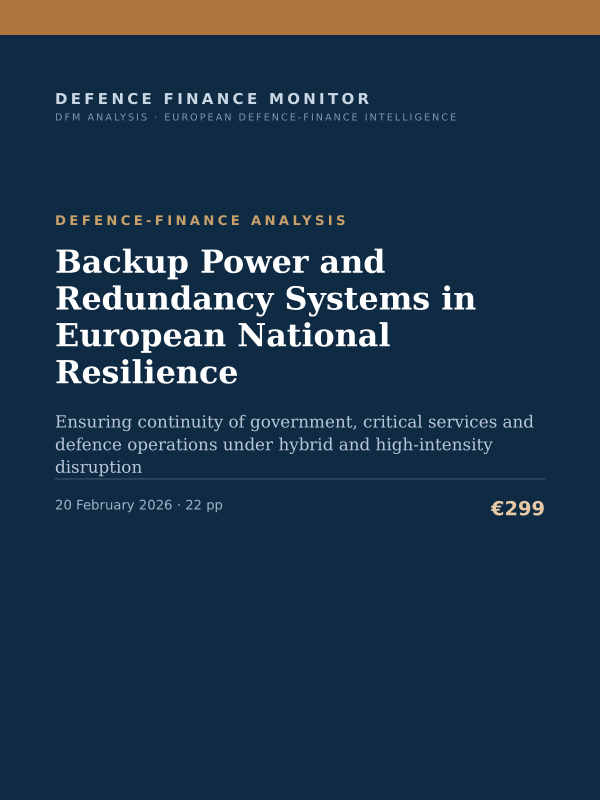
Backup power and redundancy systems have moved from being technical infrastructure details to becoming a core national resilience capability within NATO and the European Union.
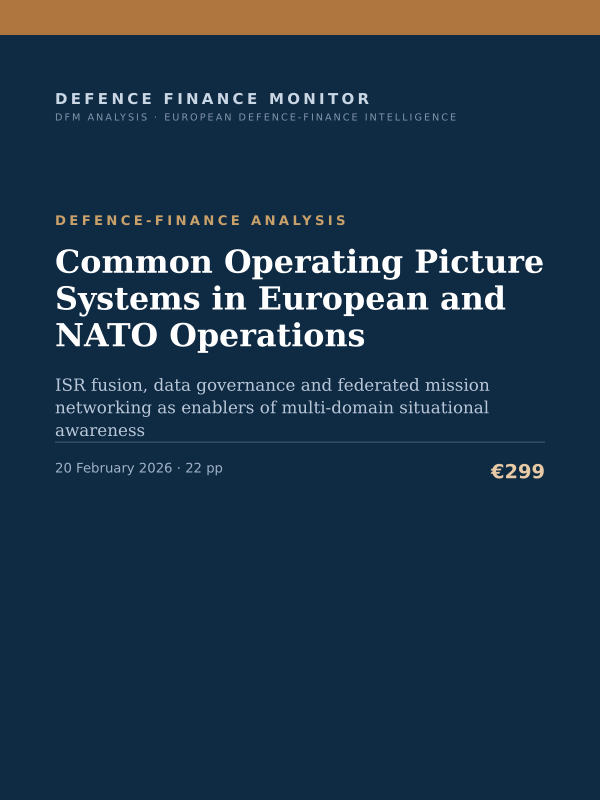
Common Operating Picture systems have become a decisive tactical capability in an operational environment defined by data overload, hybrid pressure and compressed decision cycles.
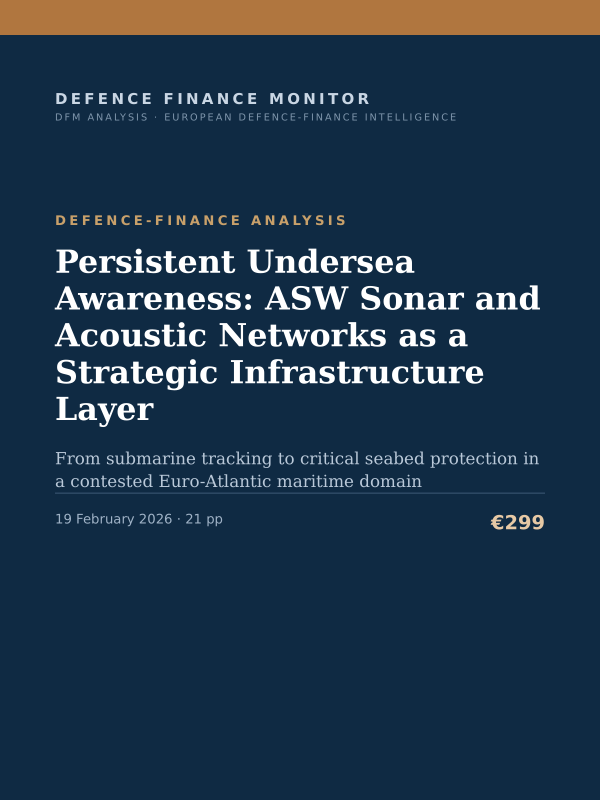
The strategic vulnerability addressed by ASW sonar and acoustic networks is not the absence of individual sensors, but the absence of a persistent, integrated underwater detection architecture capable of converting…
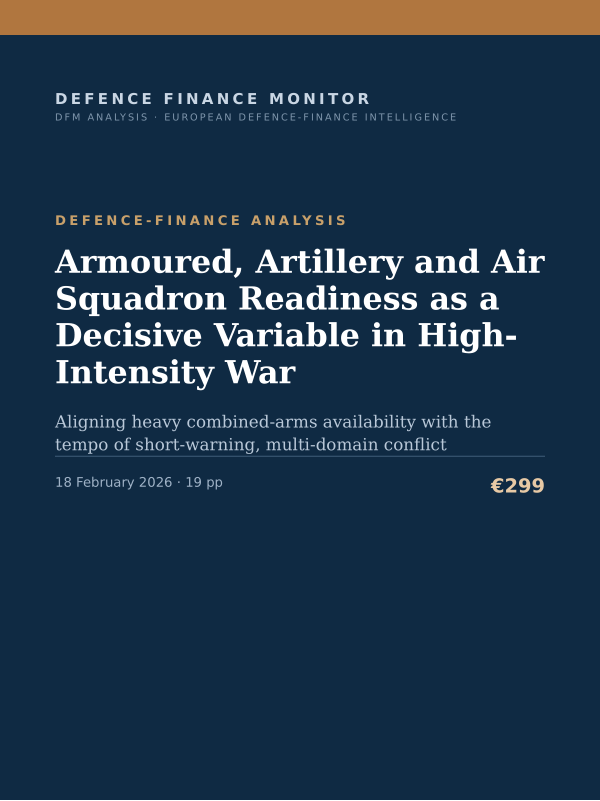
High-intensity conflict in Europe is increasingly defined by compressed timelines in which tactical gains can translate into irreversible operational and political outcomes within days.
Integrated air and missile defence is structurally vulnerable when it cannot sustain continuous, engagement-relevant detection and tracking across all azimuths and relevant elevation angles within the defended volume.
The operational vulnerability addressed by “Layered Air Defence Architecture” can be defined as the inability to generate and sustain a coherent, resilient, and scalable air and missile defence construct that can…
The operational vulnerability addressed by “Radar & Sensor Fusion Corridors” is the inability to generate, sustain, and distribute a coherent, low-latency, trusted air and missile surveillance picture across contiguous…
The operational vulnerability addressed by counter-terrorism missions can be defined as the persistent risk that transnational terrorist organisations reconstitute operational capacity and strategic depth in fragile…
The operational vulnerability addressed by National Resilience Plans is the persistent risk that a state’s decision-making, essential services, civil support to military operations, and broader societal functions will…
The operational vulnerability addressed by Maritime Domain Awareness is the inability, in peacetime competition and in crisis, to maintain a sufficiently complete, timely, and trusted understanding of activity in the…
The operational deficit addressed by “Brigade/Division Reinforcement Architecture” is the risk that allied forces cannot move, assemble, protect, command, and sustain brigade- and division-sized formations into…
Partner capacity-building, treated as an operational priority, addresses a recurring failure mode in contemporary crisis response and counter-terrorism: the inability of allied coalitions to translate political intent…
A dated, sourced PDF watermarked to you, built only from primary and official
sources cited in the document. Guest checkout by card (Stripe), delivery on the confirmation page
and by e-mail (72h / 5 downloads; re-issued on request). Invoice with VAT ID — EU reverse charge
applied automatically. One-off purchase: no subscription, no account.
Frequently asked questions
What licence do I get?
A single-user licence: one named individual may download and use the PDF for internal
professional purposes. Every copy is watermarked to the buyer; redistribution, resale and sharing
are not permitted. Full terms: Terms of Sale.
Do prices include VAT? Will I get an invoice?
Prices are excl. VAT. Stripe calculates EU VAT at checkout from your billing country; EU
businesses with a valid VAT ID may qualify for reverse charge. An invoice is issued after payment.
Can I get a refund?
Delivery is instantaneous digital content: at checkout you expressly consent to immediate
delivery and waive the EU 14-day right of withdrawal (Art. 16(m), Directive 2011/83/EU).
Defective files are always replaced free of charge — or refunded if we cannot deliver a working copy.
What format do reports come in?
PDF, watermarked to you, delivered instantly by e-mail and on the confirmation page. Links are
valid 72 hours / 5 downloads and re-issued on request.
Are reports updated?
Catalogue reports are dated snapshots of their sources; new editions, when published, are
separate documents. Eligibility reports are different:
they are re-issued as updated editions, and your purchase link always serves the latest edition
for 90 days.